
The debate around where NHS and Ministry of Defence uniforms are made has brought UK textile manufacturing back into focus. In September, Fashion Roundtable called for more public-sector uniforms to be made in Britain. The organisation argues that procurement decisions can help retain manufacturing skills and strengthen domestic capability. More than 1,200 people backed the campaign, while Fashion Roundtable estimates that around 55% of NHS and MoD uniforms currently come from overseas manufacturers.
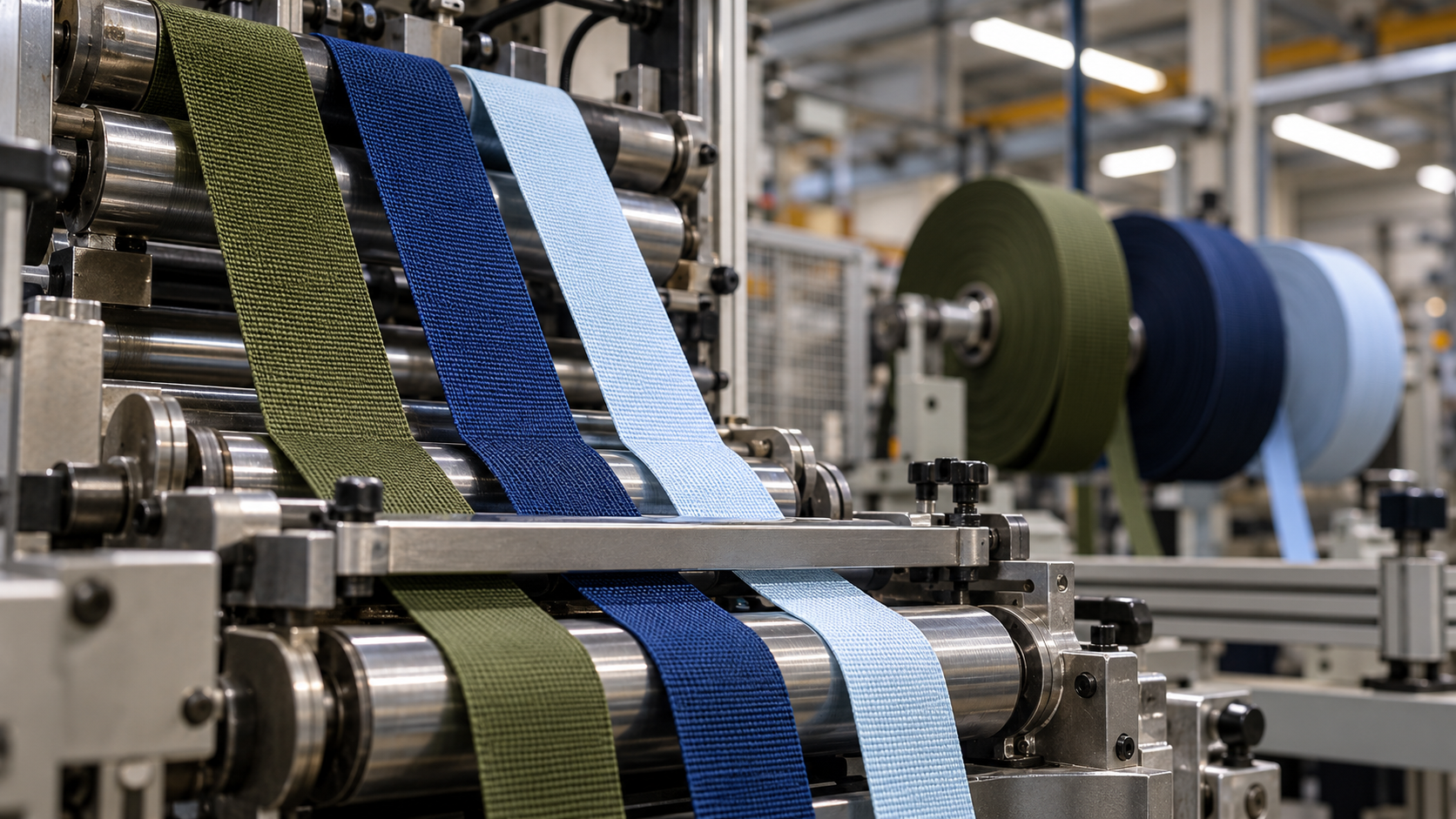
Much of the discussion naturally focuses on the finished uniform, but that is only one part of the picture. Behind uniforms, protective equipment and other textile-based products sits a wider group of specialist manufacturers. They produce webbings, tapes, bindings, straps and technical fabrics. These components rarely attract the same attention as the finished product, yet in defence and healthcare applications they can have a significant influence on performance, durability and safety.
More than the finished garment
Technical textile manufacturing involves much more than producing a standard fabric or garment. A webbing used in load-carrying equipment may need to meet specific requirements for strength, stretch, abrasion resistance or environmental performance. A strap used in patient-handling equipment may need to withstand repeated loading and regular use. It must also continue to perform consistently. Manufacturers therefore need to consider material selection, weave construction and finishing from the beginning of the development process.
Fibre choice also matters. Polyester and nylon remain widely used, while more demanding applications can require specialist fibres such as aramids or UHMWPE. The requirements of the finished product determine the most suitable material and construction. Appearance or dimensions alone are not enough.
Specialist textiles in defence
Military textiles extend far beyond uniforms. Manufacturers use narrow woven fabrics throughout load-carrying equipment, harnesses, restraints, helmet systems, bags and securing systems. They also appear in many other technical assemblies. Some applications require additional characteristics such as flame resistance, reduced stretch or specialist finishes.
Manufacturers working in these markets need to control fibre choice, weave construction and finishing carefully. This becomes particularly important when the textile forms part of a safety-critical product. The current debate around military uniforms therefore highlights a much wider area of British manufacturing. Producing the finished garment represents only one stage. The industry also needs the specialist knowledge and processes required to manufacture the technical components within it.
Healthcare has different demands, but the same principle applies
NHS uniforms may provide the most visible example of textiles used in healthcare. However, specialist fabrics and narrow woven components also feature in patient lifting, hoist systems, support products and other medical equipment.
These applications bring their own performance requirements. Manufacturers may need to consider strength, durability, repeatability and suitability for regular use. This puts greater importance on controlling yarn selection, weave construction, dyeing, finishing and testing. A webbing or strap should not simply be treated as a commodity component.
Keeping technical manufacturing capability in the UK
This is where UK textile manufacturing continues to have an important role. Specialist manufacturing relies on more than having weaving machinery available. Companies also need experienced people, technical knowledge and the ability to develop products around specific performance requirements.
At M. Wright & Sons in Quorn, Leicestershire, we manufacture narrow woven fabrics for defence, medical, aerospace, industrial safety and other specialist markets. We process yarn, weave, dye, finish, test and inspect products within our manufacturing operation. This helps us maintain close control over both development and production.
This capability becomes particularly useful when a customer needs something beyond a standard webbing or tape. Our team can consider material choice, construction, colour, finishing and performance requirements together. This allows us to develop a product around the demands of the finished application.
Looking behind the uniform
The renewed interest in where NHS and military uniforms come from highlights something broader than garment production. A strong UK textile manufacturing sector also depends on the specialist companies making the materials and components that go into finished products.
For defence, healthcare and other safety-critical markets, those less visible parts of manufacturing still matter. Retaining the skills, equipment and technical knowledge behind specialist textile production helps maintain a broader UK capability. That capability extends well beyond the uniform itself.