
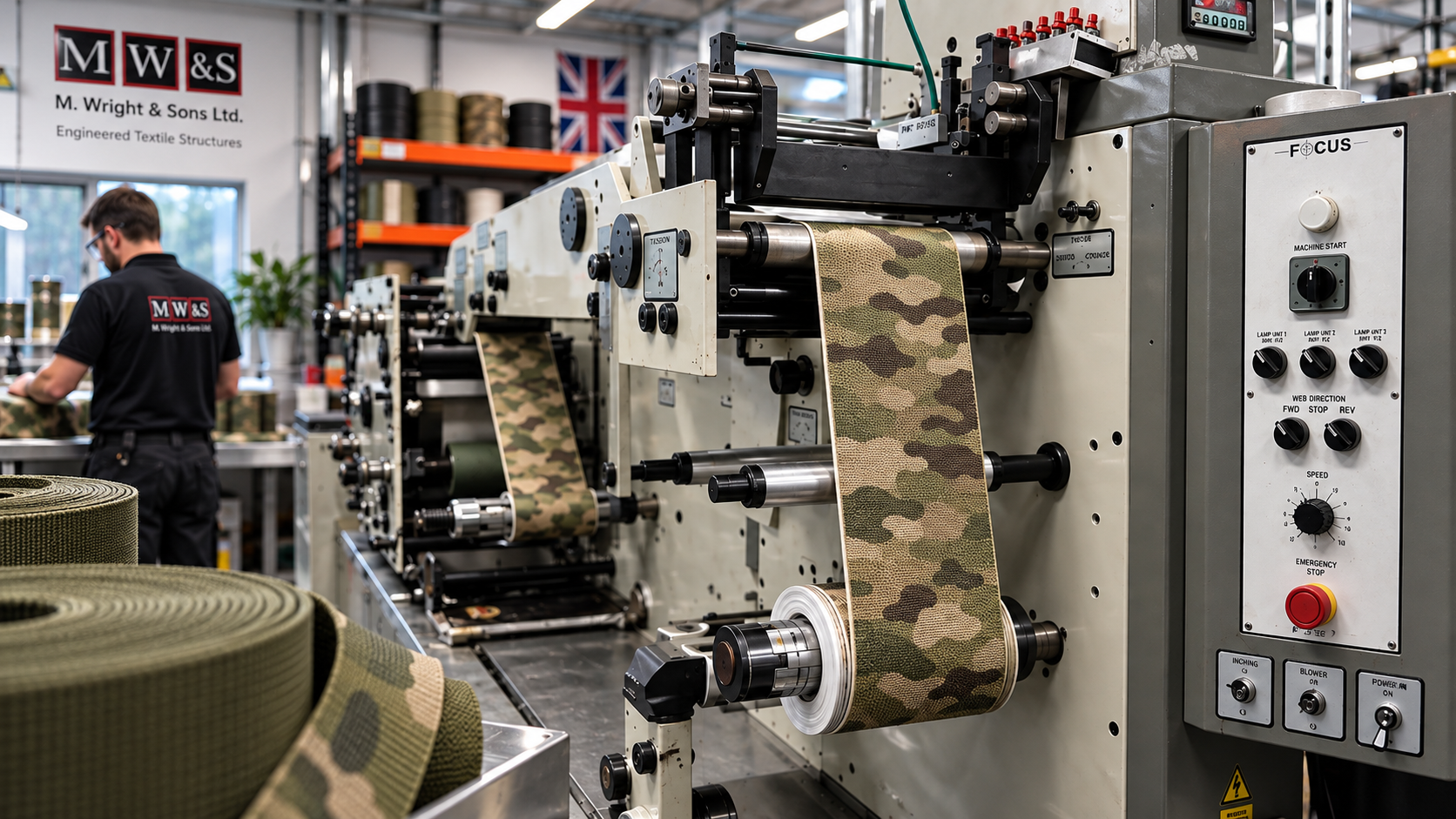
Defence supply chain resilience has become a much bigger issue in UK manufacturing. For years, procurement decisions across many industries have been shaped heavily by cost, global sourcing and lean supply chains, but defence is now forcing a different conversation. Security of supply, manufacturing capacity, access to critical materials and the ability to respond quickly when demand changes are increasingly important considerations.
UKFT has recently called for procurement reform that gives greater recognition to UK manufacturing capability, arguing that lowest upfront cost can overlook wider factors such as resilience, innovation, skills and long-term economic value. The UK Ministry of Defence has also previously described resilience as something that should be designed into defence supply chains, balancing reliability, service, cost and sustainability rather than treating resilience as an afterthought.
Defence supply chains go much deeper than major platforms
When people think about the UK defence industry, attention naturally goes to aircraft, vehicles, weapons systems and the major defence contractors behind them. But every major programme sits on top of a much wider network of specialist manufacturers, and technical textiles are part of that network.
Military equipment can incorporate webbings, tapes, bindings, straps, load-bearing components, camouflage materials, protective fabrics and increasingly sophisticated composite structures. Many of these components may appear relatively small compared with the final platform or system, but supply disruption at component level can still create problems further up the chain.
That is why resilience has to extend beyond prime contractors. It depends on maintaining specialist manufacturing knowledge throughout the supply base.
Technical textiles are becoming more demanding
The technical requirements placed on defence textile products are also increasing. At Techtextil 2026, supply resilience was a major theme within protective textiles, with discussion focused on the challenge of combining mechanical durability, heat and chemical protection, infrared signature management, finishes and other performance requirements within reliable production systems.
Even relatively simple-looking textile components can therefore carry demanding specifications. For military webbing, factors such as tensile performance, abrasion resistance, colour matching, infrared reflectance and repeatability can all be important depending on the application.
M Wright & Sons manufactures defence webbings, belts and bindings at its UK facility, including IRR and non-IRR products manufactured to recognised UK military specifications. Its capabilities also include in-house dyeing, camouflage printing and products used within applications such as PLCE systems, MOLLE-compatible equipment, harnesses and load-securing systems.
UK manufacturing capability is about more than webbing
The same manufacturing knowledge is increasingly being applied to advanced materials. M Wright’s Advanced Composites Division manufactures dry 3D woven composite preforms using materials including carbon fibre, para-aramid, basalt and ceramic fibres.
Unlike conventional laminated composites, 3D woven structures can incorporate reinforcement through the X, Y and Z axes, improving through-thickness strength and damage tolerance while retaining strong in-plane mechanical performance. These technologies are being developed for demanding sectors including aerospace and defence.
M Wright & Sons is also involved with Rolls-Royce in a UK defence advanced composites project. That provides a useful example of how specialist textile manufacturing can feed into much larger UK engineering programmes, with highly specialised suppliers contributing materials and technologies that eventually become part of far more complex systems.
Resilience means retaining capability
Supply chain resilience does not necessarily mean that every defence component must be manufactured in the UK. Global supply chains will remain important, but recent disruption and geopolitical uncertainty have highlighted the value of retaining credible domestic manufacturing capability, particularly where products require specialist processes, technical knowledge or tightly controlled performance.
For UK technical textile manufacturers, that creates both an opportunity and a responsibility. The opportunity is to contribute to a stronger domestic defence manufacturing base. The responsibility is to maintain the skills, equipment, development capability and manufacturing capacity needed when customers require it.
For a sector that often sits several layers down the supply chain, technical textiles may be becoming considerably more strategically important.