
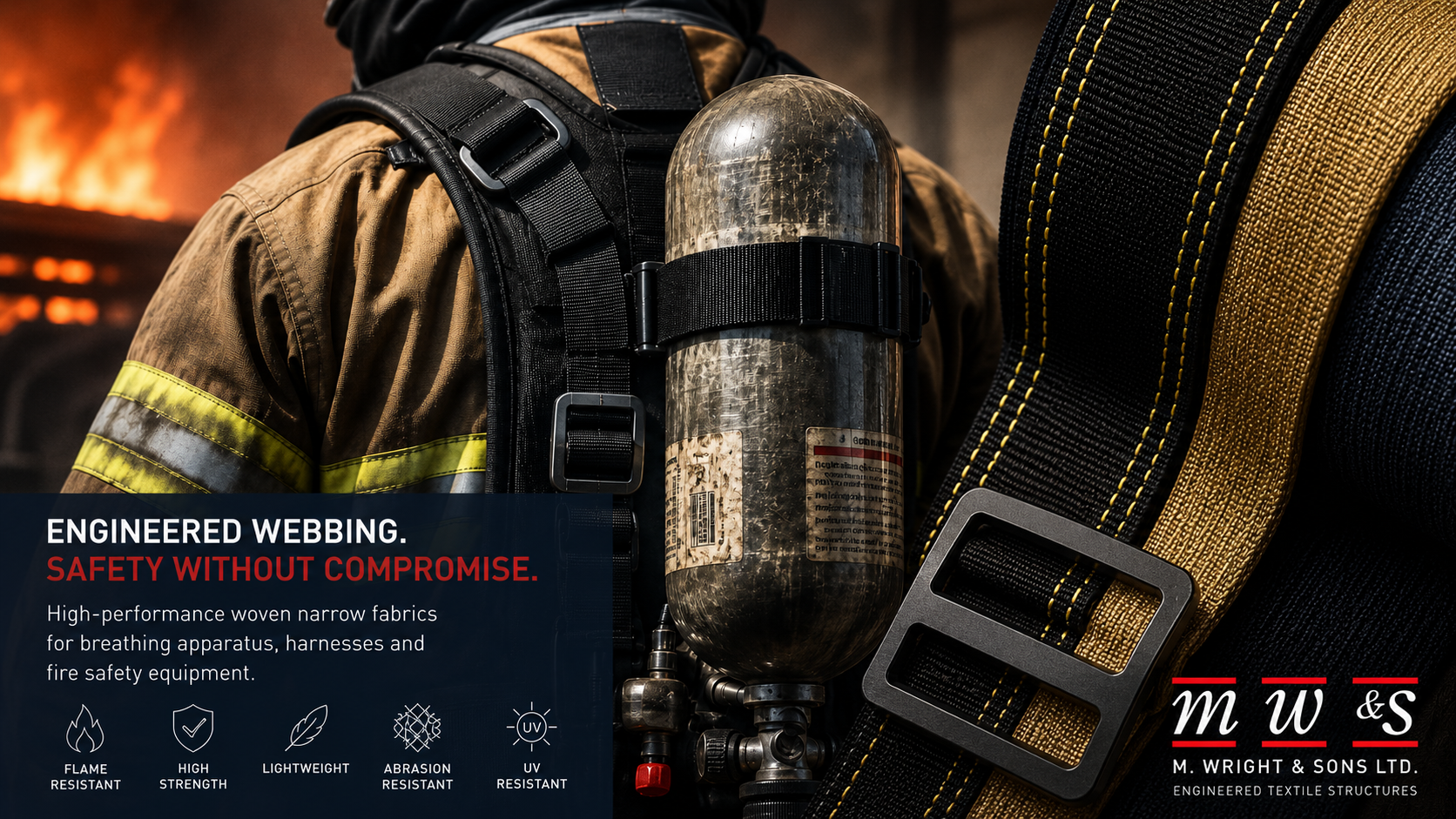
Wildfires in France and the UK: What They Mean for Firefighting Equipment
Wildfires in France and the UK have again put extreme weather, firefighting resources and equipment under the spotlight.
France has experienced a particularly difficult 2026 wildfire season. By late July, the French Interior Ministry reported that 119,000 hectares had burned since the beginning of the year, with major fires requiring thousands of firefighters and extensive supporting resources.
The UK is not immune. Fire and rescue services in England attended 170,597 fires in the year ending March 2026, 19% more than the previous year. Government statistics specifically identify the hot, dry summer of 2025 as contributing to increased numbers of outdoor fires.
Wildfire risk is therefore increasingly becoming an equipment question as well as an environmental one.
Wildfire weather changes the operating environment
Heat alone does not determine wildfire behaviour.
Prolonged dry weather reduces moisture in vegetation, while high temperatures and wind can increase both the likelihood of ignition and the speed at which a fire spreads. Météo-France now operates its Météo des forêts wildfire-danger forecast throughout the summer and states that rising temperatures increase vegetation dryness and fire-weather risk.
The European Forest Fire Information System was still identifying areas of extreme or very extreme fire danger across Europe in mid-August 2026, including pockets affecting southern Great Britain and France.
For equipment manufacturers, that means thinking beyond the flame itself.
Firefighting equipment may be exposed to combinations of heat, abrasion, contamination, repeated adjustment, mechanical loading and demanding outdoor conditions. Every component has to perform as part of the complete system.
Why webbing matters in fire safety equipment
Webbing can look like one of the simpler components in a harness or piece of protective equipment.
It isn’t.
Depending on the application, woven webbing can contribute to restraint, adjustment, load distribution and the positioning of equipment on the wearer. Width, thickness, construction, fibre selection and interaction with buckles and other hardware can all affect finished-system performance.
There is also no single material that solves every problem.
High tensile strength, flame resistance, abrasion resistance, weight, dimensional stability and environmental durability can pull a specification in different directions.
That is why the starting point should be the application rather than simply asking for the strongest or most heat-resistant webbing available.
Aramid webbing and flame-resistant fibres
Aramid fibres are particularly relevant where combinations of strength, low flammability and temperature resistance are required.
Para-aramids such as Kevlar® can provide high strength-to-weight performance, while meta-aramids such as Nomex® are valued for their inherent flame-resistant properties. M Wright & Sons manufactures Kevlar® webbings in both 100% constructions and fibre blends and works with specialist fibres including Kevlar®, Nomex®, Technora®, Vectran® and carbon fibre.
There are trade-offs.
Aramid fibres, for example, can suffer degradation through prolonged UV exposure. Fibre blends or protective constructions can therefore be considered where UV durability forms part of the requirement.
This is where textile engineering becomes more interesting than simply specifying a fibre name.
Designing webbing as part of the complete system
Wildland firefighting should not be confused with structural firefighting, and breathing apparatus requirements vary considerably according to the operation, equipment and risk assessment.
But the wider principle remains the same.
For manufacturers developing fire safety equipment, breathing apparatus, emergency escape equipment or specialist harness systems, webbing has to be engineered around the finished product.
M Wright & Sons has manufactured narrow woven fabrics since 1860 and today develops technical webbings for safety-critical applications including fire safety equipment, breathing apparatus, emergency escape systems and safety harnesses. Development, weaving, finishing and testing capabilities are based at its UK manufacturing operation in Quorn, Leicestershire.
As wildfire conditions continue to place new demands on fire and rescue services, specifying the apparently small components correctly matters.
A harness is a system.
And the webbing is part of that system.